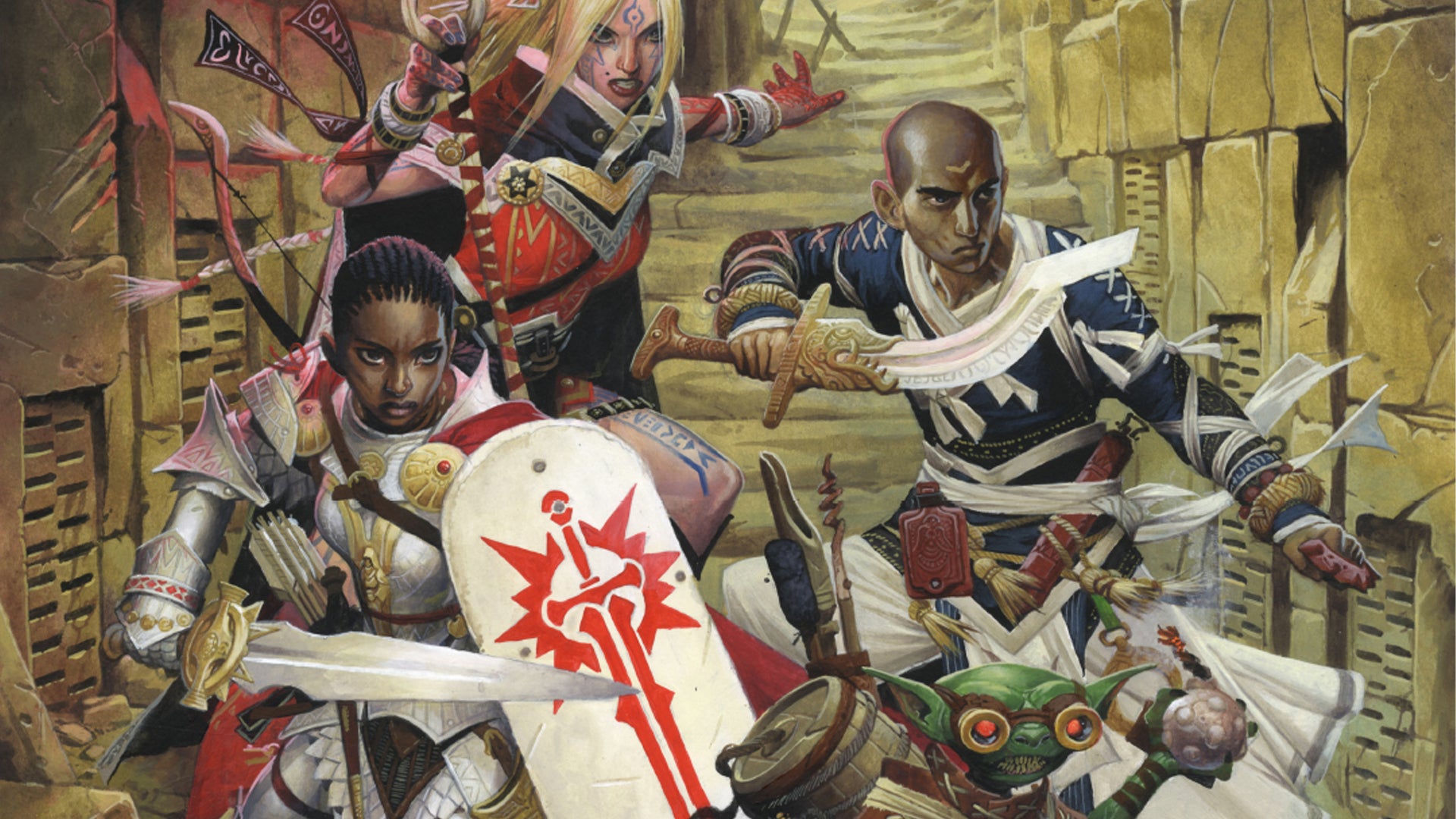
the Shaking Empress: the demon-queen who invented morality

(This is a Nietzschean myth about the invention of morality; I also have a Kantian one. Nothing says they can't both be true, even in the same setting.) 

stage 0: egoist eden

Once upon a time there was no morality. All gods were demons and all men were knaves.

The world wasn't a guignol of horror: people loved their friends and families, they feared revenge. Far-sighted princes would pass laws saying we'll kill you if you kill someone else, and sometimes the guy who backstabbed his way into power after that would keep the law around (while carving an exception for themselves.) Neighbors often cooperated, both because it's more pleasant and less dangerous than the alternative. The rich might feed the poor, the same as you might feed some ducks, and the poor might feed the rich, same as you might feed a tiger. People told the truth often enough - to maintain a reputation, to economize on memory - that there was some evidential value to listening to them, under most circumstances.

But compared to today, life was nastier, more brutal, and shorter.

stage 1: masochist mystery cult

Back in those days, no more people were motivated by pure nastiness than they are today. But among those who were was the Shaking Empress. Like other petty abusers, she liked to hurt other beings to feel powerful. Like some of them, she was already plenty powerful herself (a demon-queen, in fact.) 

Some such abusers offer a false pretense of love. Some offer power. The Shaking Empress offered - offers - nothing. She feels best when creatures grovel before her knowing they get nothing, zilch, nada in return. The Shaking Empress cannot hurt you if you do not pledge yourself to her, and if you do, all she gives you is hurt. Any deviation from making yourself as meek and pitiful as possible will result in you being tortured in your dreams, in your afterlife, and maybe even in your waking life.

If you hold yourself with pride and say you are better than the meekest worm - if you assert your power over the meanest churl - she'll hunt you down. Not because she disapproves of being prideful or cruel, but because she believes the supreme honor of these excellent things ought be reserved to herself.

None but a masochist would accept this offer. None but masochists did. At first.

stage 2: scale-dependent group selection effects

Places dominated by the cult of the Shaking Empress are not great. People are constantly getting attacked or forced to hurt themselves by the Empress themselves. There's a lot of pressure to engage in ugly self-criticism sessions. But her devoted are not likely to leave you for dead on the highway. Until they invent heroism (an advanced theological doctrine which the Shaking Goddess let out to defend her cult in a moment of weakness and has regretted ever since) they are easy to conquer and a positive delight to rule. Places with a bad case of the Shaking Goddess can, under some circumstances, become an enviable place to join, or to emulate.

stage 3: prison planet

I emphasized at the beginning that, before the Shaking Empress began her reign, people were not all nasty. But I emphasize this for a simple reason: to not pledge your soul to the Empress now is to mark yourself out as one who longs for nastiness. To be, yourself, proud and cruel, rather than offering those on up to the terrible demon-queen.

Even those who, in their hearts, reject her dominion, who do not sell themselves over to her - feign sleepless nights of being attacked, just so their neighbors know they are vulnerable. Some might feign being so meek that the Empress spares them - but few would believe that. Better to say you were under assault for lesser crimes, that no one could think you capable of greater ones. 

The Shaking Empress could not be more pleased. When whole societies worship her, they punish each other for not being meek enough. When societies stray from her, they punish each other by not being meek enough - driving themselves back into her cruel, clutching arms. From the depths of her pride and greed, she crows, in a few short aeons she will be the only enlightened, the only evil, being left.

Antinomian alignment

Here are some facts about the world (i.e., the world I just made up.) They aren't pleasant, but too bad.

First, you should know that alignment objectively exists; people are either Lawful, Neutral, or Chaotic - or if you want to be pretentious about it, Nomian, Anomian, and Counternomian. They are so from birth and this cannot change except for your Helm of Alignment Change and so on; notably, behavior cannot in any way affect alignment. 

Secondly, the basic personality and motivational structure of people is completely orthogonal to alignment: people in each have your normal spread of selflessness, selfishness, Dunbar's number dynamics, that kind of thing. 

Thirdly, if you were born with a Lawful soul (about 5-20% of the population), you'll go to heaven if you acted benevolently in life and hell if you acted malevolently in life, and you Know this, but not where the threshold is. If you were born with a Chaotic soul (about 1-5% of the population),  you Know just the opposite - that some indeterminate about of badness will damn you up to heaven and goodness will bless you straight to hell. If you're Neutral you don't Know shit.

a fool sees not the same tree

If you're Lawful or Chaotic, you can speak an alignment language. Alignment languages contain concepts that cannot be grasped in other languages, but speaking them doesn't feel any different from speaking your other languages. 

Moreover, hearing an alignment language, if you speak it, just sounds normal. If you don't speak an alignment language, it tends to sound like vague mystical patter, or people describing ineffable mystic concepts, which in fact they are - ineffable to you, anyway; they can be perfectly well effed by native speakers.

(What are these concepts? Unfortunately, I have a Neutral soul and can't tell you. But there are probably some spells and such you need them to grok.)

nor seeks to know / the law by which it prospers so

Lawful and Chaotic characters Know about their afterlife fates and Know their languages; they don't Know that alignment is a thing, or who has what, or that they're doing something unusual when they use Alignment languages, or that when people treat their alignment-talk as mystical nonsense or vague moralizing (n.b. many people like either or both of those things!) they're being anything other than just a bit dumb or lazy. People have to figure this out, and what they piece together is probably wrong.

Note that due to some perhaps obvious dynamics people of all alignments mostly grow up in societies where it's accepted that there's heaven for the good and hell for the bad, or one of the standard corruptions of this idea (living on in people's memories, heaven for the people who do the right rituals and hell for everyone else, rebirth into an infinite layer of heavens and hells around which this world is somewhere in the middle, whatever.) Chaotic souls Know this is incorrect but have a number of incentives not to say it out loud. Lawful souls Know it's true. Neutral souls hear everyone saying it and so, aside from a few village atheists, don't have a good reason to doubt consensus.

Magic that interacts with Alignment doesn't necessarily clear things up either. If you start using alignment detection spells, you'll get some interesting correlations, sure. You might even start burning people at the stake and feel good about it: the Universe is backing you up! There are scientific studies! But those correlations are going to miss out on a lot, and some of those Chaotic victims burnt at the stake are going to be, from any objective measure, good people who have passed the greatest of moral tests.

Cults of Chaos!

Chaotic souls often lead lives of quiet desperation and confusion, but they're especially likely to join weird cults. This has two basic reasons: one, they Know the dominant religious outlook is incorrect (the Chaotic outlook can almost never become the dominant one, outside of weird brief situations where a cult captures the state on some weird Chaos project), and two, they need one way or another to assuage their fears about the afterlife.

Remember, mind you, that Chaotic souls don't have inverted moral intuitions. They don't intuit that kicking puppies is good, they intuit that it's awful, just like you. But they also just intuit it's the kind of thing that gets them sent to Counternomian Heaven. 

Accordingly, Chaos Cults often really play up the aesthetics of evil, because it's the kind of thing that "feels" like it would damn you without inspiring actual guilt. Many Chaos Cults are just play-acting in this sense: they're made up of decent people who don't have what it takes for real-deal evil. Just shit on some holy symbols, gurgle the names of some demons, and call it a night: that should be enough, right? Right? 

Then you've got cults that are actually, efficiently trying to do as much evil in as short a span as possible. They've done the math. But note that in some way's they're often just as reluctant to descend into snuff-film stuff as the cosplayers: it's unpleasant, after all, and there are more efficient and less risky ways to make the world a worse place.

Sadistic jerks exist, of course. Neutral or Chaotic sadistic jerks often end up as the leaders of Chaos Cults for the same reason sadistic jerks end up as the leaders of cults generally. Base rates mean there are many more Neutral ones, so you’ll frequently have a Chaos Cult led by a jerk whose attempts to give religious explanations are pure gibberish. The speakers of the Chaos language will have to do some work kludging it into something workable.

Then there are the really ambitious ones. Some Chaos Cults, reasoning that everyone is like them, work to corrupt the rest of the world into permanent immorality to save as many souls as possible. Others form gnostic cells to overthrow an obviously unfair universe.

All of these can and are combined. 

feywild and shadowfell

If you like these, they might, potentially, work as Counternomian Heaven and Counternomian Hell, respectively.

two torches deep: OSRing PF2

Why would you do this? Well, why would you do anything? Games, like life, are an inherently stupid activity where you can do whatever you want. 

The following are quick fixes that don't require too much work. I certainly haven't playtested them. 

design PCs as NPCs

In-depth character build options, while arguably the main draw of this kind of game, make characters dying kind of a pain in the ass. So use the rules for generating NPCs of a given level for PCs. I recommend randomly rolling on a background table of your choice (make one for your setting, or use the careers from Finders Keepers) to determine what tasks you're high/moderate/low; feel free to roll also for race and class. 

Just so you can enjoy the character build minigame at least a little bit, give yourself a heritage feat, a archetype dedication feat if you're level 2+, and a class feat of your highest level.  

(Alternatively: get two archetypes at random, or one at random and the next on purpose. For each, get all its feats, plus an ancestry and its heritage feat. You're average at everything unless noted otherwise.)

Since these include the benefits of permanent magic items, GMs should only hand out consumables and Weird Shit as far as magic items go.

reaction rolls

Unless circumstances dictate a particular reaction, newly-met NPCs and monsters roll 2d6 start with the following conditions:
  • 2-3: Hostile
  • 4-5: Unfriendly
  • 6-8: Indifferent
  • 9-10: Friendly
  • 11-12: Helpful

morale

Each round of a fight, if the PCs are winning, monsters (who aren't immune to the Frightened condition) roll Will vs. 10 + party level. The DC of this increases by 5 for each level of Frightened the monster possesses, so don't hesitate to spend an action Demoralizing the enemy!

xp for gold

Use chart 10-10 on p. 511.

On the interpretation of dreams, or, the rumor table under your pillow

This isn’t about using your own dreams for inspiration -  though I am obviously in favor. (Jennifer Dumpert’s Liminal Dreaming is a fun manual for getting more juice out of that side of your brain, if that’s what you’re looking for.)

These are rules for dreams and dream interpretation by PCs, and presume that such things are, as they are in many human cultures, a relatively ordinary part of the mystical experience of the world.

(I believe these also meet ISO compatibility standards for MOSAIC Strict, and issue all necessary declarations to that effect.)

The dream roll

Make this pertaining to one PC's dreams each time there’s a long rest and either a player is curious about it or the GM wishes. (Or if there’s deliberately induced hypnosis, whatever.) GM rolls 2d6 secretly.

On a 2-5, the dream is random bullshit, albeit random bullshit PCs can read into.

On a 6-8, the dream is random bullshit, unless you’re in an area with Deep Emotional Resonance, or being observed by scrying entities, or surrounded by invisible spirits, or have some other particularly good reason to have your subconscious invaded from without. If you're sleeping somewhere that Something Happened, you get visions pertaining to that; if someone's scrying on you, you can talk to them. If something wants to talk to you, for some reason, they can.

On a 9, at least one unknown but real threat or opportunity appears in the dream in coded form.

On a 10, the dream lies to you. This is different from bullshit; a skilled interpretation will reveal actively false or dangerous intelligence. 

On an 11, at least one unknown but real threat or opportunity appears in relatively uncoded, direct form.

On a 12, you get a vision full of relatively straightforward, useful information. A vision of the villain's evil plans, or where something is, or what God wants you to do, or whatever. There's a dressing of confabulatory bullshit around it, but the core is real and straighforward.

Narrating dreams

Dreams are naturally confabulatory, i.e., we make them up as we go along. This makes them perfect opportunities for characterization, by prompting things like “what’s something you’re afraid of?,” “what was your childhood home like?,” “who’s the one who got away?” and so on. Regardless of whether it’s a true dream or a false dream, do a mix of asking for these confabulations and throwing in seemingly arbitrary details. If it’s a true dream, then at least some of it (both basic emotional cues and surrounding odd details) points to true stuff.

If you’re lazy, just do this with remembering one emotionally cued element with one arbitrary additional detail. 

Interpreting dreams

If the dreamer’s willing to share with someone else, the someone else can try to interpret. As with the dream roll itself, the GM rolls 2d6 secretly.

If it’s bullshit, then on 2-5 you suggest a false conclusion, and on anything else you’re stumped.

If it’s not, then on 2-3 you get a mistaken conclusion and on 9-12 you get an accurate, but likely incomplete, one.

(Note that false dreams are distinct from bullshit ones. Bullshit dreams are all noise so any signal you get from them is coincidental or imposed, whereas false dreams, accurately interpreted, will give you dangerously false information - just as if, if I write down a lie and cryptographically encode it, an accurate decryption will yield a lie.)

Obviously anyone can speculate beyond this, but that’s what rolling per se will get you. You can’t roll to interpret your own dreams.

Bonuses on these sorts of rolls

I’d advise the GM to figure out what bonuses characters get on these, if any. If you’re playing 5e, then perhaps Wis, being a Sorcerer or Warlock, and having a chaotic alignment increase the chances of significant dreams, while Int, being a cleric, and proficiency in Insight improve interpretation slightly. Or you could just make a guess about how dreamy and intuitive each character is. Either way I suggest not telling players the formula; let it be as mysterious to them as dreams are to us. Perhaps your GM is just pretending to roll and it’s all bullshit? One can never know.


Phlox Pong #2: Arachnofeminism

Phlox has pinged my pong. I gracefully accept.  

(Credit where credit is due: I had recently listened to this podcast episode and Phlox's tasteful spider tiddy picture reminded me of the descriptions there of both tarantelism and the Dionysius cult.)

Week 0: an outlier adn should not be counted

How many spiders do you eat in your sleep? No, scratch that, doesn't get specific enough. Frankly, ultimately, spiders crawl into your gaping mouth all the time and it's no big deal. (They're probably high in protein, low in carbs; consider increasing your intake.) How many spiders do you eat in your dreams

This might be hard to check, because we tend to forget our dreams. Luckily, the good news is if you do remember swallowing a spider in your dreams, the effect is actually nullified. Hooray! I recommend keeping a dream journal. It's a key component to growing as a wizard, after all, and even if you don't have any wizardly ambitions, it will protect you from dream-spiders laying their eggs in you.

Week 1: taranteloi

But consider the opposite scenario: you have no memory of eating spiders in your dreams. Oh dear! Then any spiders that may have entered into your dream-body are hatching there right now? Symptoms include itchiness, jumpiness, and something feeling just vaguely off. You may be able to consult a professional (make sure your witch is licensed; there are a lot of frauds out there.)

If you can't afford professional help, try dancing in the town square. Really work up a sweat until you collapse, ideally. If you sweat it out in your dreams that has a good chance of helping purge your dream-body.

Week 2: mænad engine

This usually only happens if you've been dancing in the town square for a while. Now, let's be clear: dancing yourself half (or more) to death is not ineffective. Ten out of zero clinical studies suggest it is highly effective at ridding your body of dream spiders. But it's also quite well-known that those with a higher percentage of dream spider larvae infesting their astral body will be driven to a higher predisposition to dance. What felt like a minor itch or restlessness at first might be cured by the dancing, but if you find yourself continuing, well, that's just because they've awakened. Should have worn yourself out more vigorously in the beginning!

It's well-known that only a major dream spider infestation - one infecting a large population in a small area - tends to progress to this stage. So you'll probably be trying to purge yourself of dream-eggs with plenty of friends. But once you all do progress to this stage, the important thing to remember is: it's out of your hands now. You are not responsible for what you do. No one will judge you for what you do, certainly not for the frenzied copulation and self-injury you engage in with other participants.

Maybe this frenzy will cure you all, maybe you'll be lost entirely. But it's important not to stigmatize the victim here. No one will judge you for the bizarre mix of adultery, battery, and blasphemy into which you and the rest of this congeries descend. We must keep our eyes on the real perpetrators: a cloud of arachnophagous dreams.

Week 3: the beast with two backs

It is a feature common both to new religious movements and to lovemaking: the desire to escape the self entirely, merging with the other. At last you have achieved it. Eight limbs, two heads (six eyes short), the boundaries between you and another unfortunate have melted away, sublating to a third and better creature: a drider. 

Those who have seen a drider know it is long past human. Its dreams are not human dreams. But human dreams may feature it.

To Phlox with Love

But what is this? Only you can say, my dear.

(via)


The Great Pong Heist of 2021: Embassy of the Antimoon

What's the problem, Semiurge? Cat got your tongue? Gods cursed you with writers' block? Currently trying to escape from an elaborate series of traps in a Propaganda Due-run CIA blacksite? Either way, I couldn't help but notice the voluptuary vanitas that Phlox left on your doorstep back in the benighted days of the Trump administration. By right of usufruct, terra nullius, squatters' rights, and nine-tenths of the law, I'm sequestering this scandalous oilwork to my blog for safekeeping. 

Phlox, my dear, don't think you're getting off scot-free either. For lobbing a ping where it just wouldn't pong, I've elected to confiscate your idea of a Zodiacal reaction table. That should be alright, shouldn't it? After all, you did say you had abandoned it.

Embassy of the Antimoon

Condition of the Ambassadrix, d8:

  1. Full Moon. The lady of the embassy is not present; courtiers (an ossuaryful of skeletal homunculi) must instead run the show between her demise and coming birth. Anarchy and opportunity.
  2. Waning Gibbous. The antimoon is but a babe, and all power in her regent. But hints of her personality this time around can already be seen. All are busy in an attempt to reform themselves to match the adult she shall become.
  3. Waning Crescent. The antimoon is in her girlhood, or perhaps in her boyhood. She knows what she wants; nothing else. A tyrant which her courtiers manage only through their deceit and her innocence.
  4. New Moon. The antimoon is in her full power. All know who is in charge here; ambitions are vast. Little skeleton homuncili are set fast to work, and the snake follows those who tarry.
  5. Waxing Crescent. The antimoon has slowed down just slightly as she hits middle age. Whether or not she buys a new sports car, she is perplexed by philosophical questions: is she a mayfly, doomed to extinction in just a week or two? Or is she immortal, appearing again and again? 
  6. Waxing Gibbous. Death, or rebirth, comes near. The antimoon offloads personal responsibility for institutions that she fancies will bind her successors, even as she remembers evading those of those before.
  7. Eclipse. The Antimoon entertains her otherwise shy consort, the Antisun. 
  8. Occulted by Storm and Sky. As 1d6+1 above, but the Antimoon is locked out of her palace by storm giants. She may seek the aid of ruffians such as the PCs to achieve egress.

Goals of the Ambassadrix, d12:

  1. Aries. The Antimoon seeks to spur war between father and son, brother and sister, nation and nation.
  2. Taurus. The Antimoon instead seeks to unite the ranks of men against a single threat, which she shall unleash.
  3. Gemini. The Antimoon is building a double-world of our own, sending forth copyists and kidnappers. With a scapel and blue pen, she edits out what she considers "errors" before translating them to her new world.
  4. Cancer. The Antimoon has seen the most statistically perfect equilibrium of our universe, and seeks to hurry it along. (1d4 teloi: 1: perfect entropy, 2: zero-surplus competitive equilibrium, 3: total conformity to human desires, 4: roll on Ionian Ontology Generator)
  5. Leo. Fed up with mortal incompetence, the Antimoon has decided to take over the world on her own.
  6. Virgo. She has had infinite previous iterations, but surely, there is at least one thing that is new to her? She will find that thing.
  7. Libra. The Antimoon seeks to undo the work of her predecessor (roll on this chart again.)
  8. Scorpio. The Antimoon has designated the PCs as her frenemies, seeking to earn their love and emnity all at once.
  9. Sagittarius. The Antimoon has located the five young mortals on whom the world's destiny pivots, and is seeking to find them appropriate tutors.
  10. Capricorn. ___
  11. Aquarius. But for the sake of five righteous ones is the world maintained. The Antimoon seeks to (1d6: 1-2, tempt them away from righteousness to better immanetize the eschaton; 3-4, raise up a sixth to righteousness before the fifth passes; 5-6, )
  12. Pisces. The Antimoon seeks to pass herself off as some other divine figure, and steal its worship.

Form of the Embassy, d6:

  1. Mercury, an illegal marketplace which has opened up, and which offers wares from a slightly wrong version of this world
  2. Venus, a gallery of arts, with the Great Patroness the Antimoon at its center of prestige and funding,
  3. Mars, a rumbling plague, ranks of doctors passing through the miasma to carry out ukases from a court of meritocrats,
  4. Jupiter, an actual roving embassy, with its queen from a far-off land,
  5. Saturn, a carnival celebration which has incongruously broken out,
  6. Nibiru, a universe on the other side of the mirror (if Nibiru x Gemini, the Antimoon seeks to sublate these universes to a higher unity)

Engarde!

As one sinecured gentleman might say to another: the ball is now in your court. Phlox or Semiurge, I present you with a gift: a simple cortical homunculus. He might not look like much, but it is up to you to shape him into higher and finer things.

But use him quickly and well. For if you do not, no doubt some other enterprising blogger shall adopt him as his own.

speleogenesis apparatus

In the style of my feudal crisis generator, this generates a (very stupid) dungeon history.

Drachenschwanz #2 out!

The latest issue of the FKR community zine,  Neverending Drachenschwanz #2: Every Book is a Sourcebook just dropped! Inside you'll find roleplaying games based on Snow Crash and The Pillow Book of Sei Shonagaon, adapting Mouse Guard and Numenera to more of a rules-light style, and more! Free as in Kriegsspiel, free as in beer.

Yours truly has an article, "Three Book Campaign Creation," giving some random tables for the following book-based methodology, which is probably ultimately better with your own bookshelf than my examples:

  1. One book of general or social history, giving an overview of the life and dynamics of some time and place.Scratch the serial numbers off and you've got most of a setting.
  2. One nonfiction book about magic and shit, either describing an elaborate belief system or some spooky stuff we can't explain. Inject that into the setting, changing each as necessary so they feel seamless.
  3. One book about some kind of effort to do something, giving you the basic set of plot hooks. Heists gone wrong, voyages gone wrong, and wars gone wrong (all of them) are always right.

When I specify nonfiction, don't imagine that accuracy is all that important. Crankery is wonderful, especially but not exclusively in section #2. The point of going to nonfiction is to avoid creating a genre work based on a genre work based on a genre work, which I consider to be a weakness to which I am quite vulnerable. Of course, you can Rule 0 this stricture just like you'd Rule 0 anything else!

The Special Achievement Mode of this, of course, is to ask each of your players to give you a book in each of these categories, doubling up as necessary, and then you run that campaign in a month.

Lizardman Diaries-style weird fantasy artifacts

Michael has put up some great generators recently for monsters, characters, and locations. Allow me to extend the sincerest form of flattery by extending it to artifacts.

a keywords system for wild magic

Here's the bones of a magic system - graft it on to your favorite. Like most keyword-based magic systems, there are transitive verbs and object nouns - or, rather, collections of them. 

You'll be rolling on them with a certain degree of power and control - for each word, when you cast the spell, roll XdY, where X is the control (default 1) and Y is the power (default 4), choosing whichever result you like best if the control is there. If the roll reveals a null result (for instance, "someone whose lock of hair you are holding" when you aren't holding a lock of hair) either the spell fizzles or the GM can interpret how they please.

Runes of Transitive Verbiage

  • DURGUREL
    1. create dizziness in
    2. deal 1 damage to
    3. deal 2 damage to
    4. deal 3 damage to
    5. send into permanent sleep (can only be woken by true love)
    6. cause heart attack in
    7. instantly kill, causing soul to rise as revenant
    8. instantly kill, disintegrating the soul of
  • HEGMODA 
    1. cause drowsiness in
    2. heal 1 damage from (after their next rest)
    3. heal 2 damage from (after their next rest)
    4. heal 3 damage from (after their next rest)
    5. heal all damage instantly from
    6. heal disease of
    7. restore to total health
    8. resurrect (may come out wrong)
  • MISHVOYAD
    1. become charmed by
    2. know something: (GM rolls secretly, 1d4: 1-2, true and not obviously useful, 3 obviously useful, 4 false)
    3. observe (as if directly present with)
    4. know name of
    5. observe and communicate (as if directly present with)
    6. compel truthful speech from (even if it cannot normally speak)
    7. know everything anyone knows about
    8. switch souls with
  • ILOGLON
    1. pull with force
    2. push with force
    3. careen in random direction
    4. reduce mass of
    5. grant power of flying for five minutes to
    6. grant power of flying for five hours to
    7. teleport somewhere (GM rolls 1d6 secretly: 1-5, auspicious for you, 6, inauspicious for you) on this plane
    8. teleport somewhere (GM rolls 1d6 secretly: 1-5, auspicious for you, 6, inauspicious for you) on this plane

Holy Names of Objective Nounery

  • NAGMODASH
    1. nobody
    2. self
    3. person nearest to you
    4. person whose lock of hair you are holding
    5. everyone present
    6. concrete person you are thinking of
    7. person who best matches a particular description
    8. everyone you've met who matches a particular description
  • LASHAM
    1. self
    2. person you are pointing at
    3. person you are pointing at (GM rolls 1d6 secretly: 1-5 if they are hostile, 6 whether or not they are hostile)
    4. all hostile persons present
    5. someone hostile whom you're not aware of
    6. your worst enemy
    7. your worst enemy, and all of their kinsfolk
    8. your worst enemy and everyone they've ever met
  • GEELABENEH
    1. object you are holding and looking at
    2. random object you are in contact with
    3. random object in near vicinity
    4. nearest object that sort of matches what you are thinking of
    5. everything in near vicinity
    6. object you are thinking of
    7. object under some description
    8. everything you have touched in the last year and a day

Power and Control

For power, start with d4. Bring power up to d6 if you meet any three conditions:
  • this is the first time you've cast a spell today 
  • you're in a place of power, and the first person to cast a spell in this place of power this day
  • it's the full moon or new moon
  • you've spent over an hour casting the spell
  • you do something (else) dangerous
Bring power up to d8 if you meet any three conditions:
  • this is the first time you've cast a spell this year
  • you’re in a place of power, and it’s the first time anyone has cast a spell here this year
  • it's an eclipse
  • you're destroying a unique object of immense value (congratulations, humans! the universe in its lovingkindness considers each of you unique and of immense value)
  • you've spent over 72 hours casting the spell

Subtract one point of control for each spell you've cast today, or if it's a new moon. (If it goes zero or worse, treat it like disadvantage.) Add a second point of control if any two of:

  • it's the full moon
  • you've spent over an hour casting the spell
  • you have two assistants helping you
  • you've kept an inconvenient taboo for the last year
Add a third point of control if you’ve kept an inconvenient taboo for the past year, and any two of:
  • you’ve spent over 72 hours casting the spell
  • you have over a hundred assistants helping you
  • you’ve completed a quest to research the exact conditions of casting this particular spell at this particular time

Examples

Jenny the hedgewitch points her finger at Goodwife Alice and curses: “a pox upon you, Goody Lyss!,” invoking DURGUREL LASHAM. It’s the full moon, and the first time she’s cast a spell today, so she’s up to d6, and in addition to the full moon she’s kept her taboo of not bathing for the past year, So she rolls 2d6 for each word. For DURGUREL she gets 2 and 3 (1 damage or two), and for LASHAM she gets 2 and 5 (Goody Alice or some unknown enemy.) She opts to deal 3 damage to some unknown enemy, if there is one, and Alice breathes a sigh of relief - that smelly weirdo is just faking it after all.

Andradaros the Archmage wishes to achieve apotheosis with an 8/8 result on MISHVOYAD NAGMODASH, exchanging his soul for all the gods. He spends 72 hours prior to an eclipse, and the height of which he shatters a crystal idol of all the gods to glass; he’s spent a big quest on this; and he’s performed the Theophanic Rite of Hieronsmus every day for the last year, so he rolls 3d8 for each: MISHVOYAD is 5, 3, 8; NAGMODASH is 1,7, 1. He doesn’t switch souls with all the gods, but does switch souls with Nargarbet, the King of Heaven, who is pissed off to be encased in mortal flesh and will be plotting his revenge. Andrados now lacks a physical body but does oversee the universe from a sort of metaphorical throneroom, a position he is singularly unprepared for.

Killing this system and taking its stuff

You probably want to (1) make some setting-specific keywords and power/control conditions, probably reflecting more thought than I’ve put into these proofs of concept and (2) excise any complications that aren’t helpful to your purpose. 

If you want to add more bells and whistles, places and times of power could add power by filling up odd pips with the word’s native results and even pips with their own results, and their own unique ways of charging and controlling spells cast then/there. (A zine-length work might give a hexcrawl with several such locations? I’ll add that to my folder of projects to procrastinate.)

doing unto others

The Oath is pretty simple. You can swear it amid torchlight if you like, or after a day of fasting, and the rest - some do it after debauchery - but you can also just say it:

Henceforth I swear all my will and resources to the good of all beings who have taken this oath.

This Oath is independently discovered and propagated amongst numerous worlds. If arriving roughly contemporaneously with the advent of scientific thought, the world has a 62% of becoming a post-scarcity utopia within five sapient generations. If invented and spread within an agrarian civilization, with no simultaneous invention of scientific thought, the Oath is 88% likely to be incorporated into existing patriarchal and tributary power structures within as many generations. 

On REDACTED, four out of five conditions for the emergence of scientific thought are present - so it's a toss-up on that front - and the Oath is in its early, revolutionary stages. It is rapidly accumulating heresies. These include:

  • implicitarianism, the notion that the good of humanoid nature - or, perhaps, reincarnation from infinite previous lives, at least one of which must have taken the Oath - means everyone has already taken it, therefore everyone is always already obliged to the good of everyone,
  • explicitarianism, the notion that the Oath's remit only extends to those who take it in the same langauge or with precisely the same ideas in mind, which has led to (1) spurious justifications for cultural chauvinism (2) miniature groupuscules who are sworn only to the good of each other,
  • the Administration of the Oath, a bureaucratic structure which, by virtue of claims of expertise, regards itself as the only competent party to administer the resources and will pledged by all Oathtakers to each other
  • the Cult of the Ancient Saints, which regards that since the Oath can be easily discovered, ancient powerful entities must have taken the oath, and are looking out for Oathtakers even now (it is figured that fairly traditional worship and offering is the best way to promote the good of these ancient saints in turn, and especially to let them know that you are a proper Oathtaker who they should consider as in the circle)
  • the Good Sisters and Brothers of Poor Queen Ntalchy, a move towards the mutation towards tributary and patriarchal power structures already known; since Queen Ntalchy is a good queen and the laws of the Empire of Glai are good laws, naturally Oathakers should uphold her and them, especially as she is working so hard to bring the benefits of her empire to sundry benighted folk,
  • the Cenobites of Exactitude, monastic communes founded by Oathtakers who regard the Oath as only extending to those who have fully kept it - some of which have come to be supported in a kind of quid pro quo with Queen Ntalchy, 
  • Latitudinarianists, those who reject the exactitudinist line completely, and go about begging what they are owed from their cosworn (what they really offer, of course, is a chance for others to practice the Oath, which is more valuable still,) 
  • hyperexplicitarianists, who conclude egoism (various splits frequently end with each side declaring the other secret hyperexplicitarians)

...alongside the various forces of the old order who, unlike Poor Queen Ntalchy, haven't yet decided on a if-you-can't-beat-em-join-em approach, and are going with the traditional approach of "slaughter the weird new leveling religion."

landscape dreams of an unmortal mind

For Paintings Jam, I've submitted Landscape Dreams of an Unmortal Mind, an itsy-bitsy, artsy-fartsy set of experiments inspired by landscapes (0, 1, 2, 3, 4, 5, 6) created by Joel Simon's Artbreeder - a few dungeons, a few broader scenarios, some worldbuilding, generally enlivened by random tables. I tried to go with "paintings" that struck me as being semantically coherent in some way, but that weren't quite what a human would come up with. It's a shame, and not only for professional artists, that as these algorithms get "better," they'll be more mimetic of what humans would paint - I wanted to celebrate a certain degree of awkwardness, or rather distinctiveness, in what my robotic friend would come up with.

Per Artbreeder license, all images are public domain, and I didn't see any reason not to apply that to the text as well. Best viewed in a pdf reader with facing dual pages and separate cover page. Simmering possibility of violence, subordination of the mind, body horror, and profanity - though none of them forming predominant elements - may understandably displease some readers.

Most of the paintings were made by playing around with other images produced by Artbreeder users, which in turn were made in the same way - follow the image links above to see each picture's "genealogy."

Unicorns: the astonishing science behind the myth

MYTH: Unicorns bless and adore virgins.

FACT: This superstition has a considerable basis  in truth; unicorns scorn the married as they scorn parents, and are most often found by those in the flower of young adulthood. But a unicorn may grace avowed sluts, as they disdain those who have taken holy vows. Those who have been "married" according to the fiction of local law but without their consent may find a unicorn, but not every thing that may repel the unicorn is freely chosen: no man or woman in line to inherit a throne, despite what the stories may tell you, has ever seen a unicorn, except perhaps from a great distance, carrying some other hero.

Unicorns are creatures of most awesome and terrible Law, bearers of Obligation, and will not subject anyone with currently standing obligations to the fulsome grace of their presence. 


MYTH: Unicorns never charge someone with a task that is beyond them. Relatedly: those chosen by unicorns are special, virtuous, talented people, a class apart. Relatedly: those tasks assigned by unicorns are special, virtuous, necessary.

FACT: Unicorns frequently oblige persons to quests which are nonsensical, amoral, or simply catastrophic. An untalented young artist is as likely to be charged by a unicorn with writing the Great National Epic as a talented one; good governments as well as bad are assigned to be overthrown; unicorns may appear to unattached persons and charge them with installing terrible tyrannies. Two persons who have seen the same unicorn may be sent on logically incompatible quests.

The extent to which a unicorn chooses either the victims or their new obligations is unknown. While meeting the unicorn and taking on their task is greeted with delight by some, and feels as though voluntarily taken on, it is known that many others despair of their new obligations.

MYTH: The unicorn is a mythical elaboration of a real creature, the monoceros of distant lands.

TRUTH: Many mythical creatures, such as the rhinoceros, the triceratops, the ki-in, and the dryad, fatal to be seen in her nakedness, are garbled second-hand versions of that very real creature, the unicorn. The morphological diversity of these creatures underscores that the unicorn may not look just like what one expects. One may be in your peripheral vision right now - but you will not notice it, unless the conditions are right.

MYTH: Unicorns are the sworn enemies of Night-Mares, and will do battle with them.

TRUTH: The night-mare is but the unicorn driven to insistency. Against an obstinate acquaintance who dallies or refuses her quest, a unicorn visits in sleep to offer unwelcome encouragement in the form of restless dreams and mornings of unwished memories. These tend to get worse over time.

It is true that some black-guards have been known to ride night-mares into battle. Some people react to the night-mare's tortures by inuring themselves rather than complying, and by overcoming their fear of the enraged unicorn, they may tame it and ride it into battle. To so harden oneself is a rare feat, however.

MYTH: A unicorn's presence and unwished charges can be banished by losing one's virginity. Related myth amongst those disabused of Myth #1: the unicorn, and in particular its manifestation as the night-mare, can be thrown off by taking on new obligations - marrying, being elected to office, or perhaps even a simple vulgar oath.

TRUTH: Few myths cause quite as much disaster as this. Far from hemming in the unicorn, taking such oaths permits the jealous night-mare to visit its horrors upon those to whom the oath-taker has attempted to oblige herself.

MYTH: The unicorn is beauty and grace.

FACT: As anyone who has met a unicorn can attest, some myths are true.

Whelanesque Dungeon Generator

Nick Whelan of Papers & Pencils has created a lovely set of tables for dungeon brainstorming, representing years of work - a monumental resource. The following button represents, by contrast, several minutes of work, and is just a straightforward way of randomly rolling on the same.